


Close Menu
Meteorological Technology International
  • News
    • A-E
      • Agriculture
      • Automated Weather Stations
      • Aviation
      • Climate Measurement
      • Data
      • Developing Countries
      • Digital Applications
      • Early Warning Systems
      • Extreme Weather
    • G-P
      • Hydrology
      • Lidar
      • Lightning Detection
      • New Appointments
      • Nowcasting
      • Numerical Weather Prediction
      • Polar Weather
    • R-S
      • Radar
      • Rainfall
      • Remote Sensing
      • Renewable Energy
      • Satellites
      • Solar
      • Space Weather
      • Supercomputers
    • T-Z
      • Training
      • Transport
      • Weather Instruments
      • Wind
      • World Meteorological Organization
      • Meteorological Technology World Expo
  • Features
  • Online Magazines
    • January 2026
    • April 2025
    • January 2025
    • September 2024
    • April 2024
    • Archive Issues
    • Subscribe Free!
  • Opinion
  • Videos
  • Supplier Spotlight
  • Expo
LinkedIn X (Twitter) Facebook
  • Sign-up for Free Weekly E-Newsletter
  • Meet the Editors
  • Contact Us
  • Media Pack
LinkedIn Facebook
Subscribe
Meteorological Technology International
  • News
      • Agriculture
      • Automated Weather Stations
      • Aviation
      • Climate Measurement
      • Data
      • Developing Countries
      • Digital Applications
      • Early Warning Systems
      • Extreme Weather
      • Hydrology
      • Lidar
      • Lightning Detection
      • New Appointments
      • Nowcasting
      • Numerical Weather Prediction
      • Polar Weather
      • Radar
      • Rainfall
      • Remote Sensing
      • Renewable Energy
      • Satellites
      • Solar
      • Space Weather
      • Supercomputers
      • Training
      • Transport
      • Weather Instruments
      • Wind
      • World Meteorological Organization
      • Meteorological Technology World Expo
  • Features
  • Online Magazines
    1. April 2026
    2. January 2026
    3. September 2025
    4. April 2025
    5. January 2025
    6. September 2024
    7. April 2024
    8. January 2024
    9. Archive Issues
    10. Subscribe Free!
    Featured
    May 5, 2026

    In this Issue – April 2026

    By Web TeamMay 5, 2026
    Recent

    In this Issue – April 2026

    May 5, 2026

    In this Issue – January 2026

    November 27, 2025

    In this Issue – September 2025

    August 11, 2025
  • Opinion
  • Videos
  • Supplier Spotlight
  • Expo
Facebook LinkedIn
Subscribe
Meteorological Technology International
World Meteorological Organization

Anthropogenic emissions “doping the atmosphere” says WMO chief, as IPCC report enters final review phase

Dan SymondsBy Dan SymondsFebruary 15, 20223 Mins Read
Share LinkedIn Facebook Twitter Email
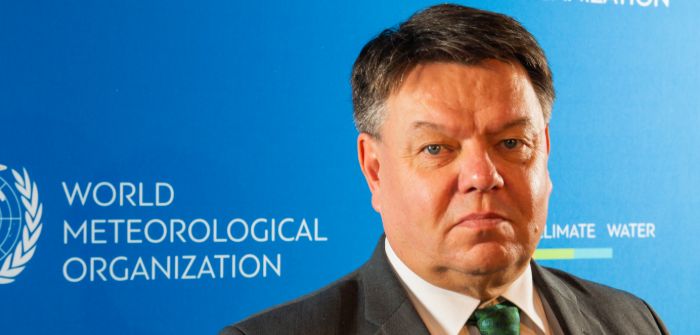
Petteri Taalas, WMO secretary-general - credit: WMO
Share
LinkedIn Facebook Twitter Email

Prof. Petteri Taalas, WMO secretary-general, has likened the rapid intensification in global warming to an athlete using performance enhance substances, in that the increase in harmful emissions, particularly CO2 , is causing the atmosphere to perform even more effectively.

The analogy was made ahead of a meeting to consider the second instalment of the Intergovernmental Panel on Climate Change (IPCC) Sixth Assessment Report, which integrates natural, social and economic sciences, and reflects on the increasing importance of urgent and immediate action to address climate risks.

“At the moment we have the Winter Olympic Games in China where we have high performing athletes,” said Taalas. “If you give them doping substances, then they perform even more effectively. That is what we have done to the atmosphere. We have been doping the atmosphere. Our doping has been the use of fossil fuels and that has already led to an increase in disasters and their human and economic impact and biospheric impact,” he said.

Prepared by IPCC’s Working Group II, the report builds on the Working Group I contribution to the Sixth Assessment Report released in August 2021 and shows that climate change is widespread, rapid and intensifying.

“From these previous reports, the message from the physics community is very clear,” adds Taalas. “What we have seen happening so far and what is expected to happen during the coming decades and centuries, especially when it comes to melting of glaciers and sea level rise which is unfortunately going to last much longer than earlier estimated. The impacts of climate change are already very visible. We have seen them happening worldwide, especially vulnerable areas of the world include Africa, Southern Asia and the Pacific islands.”

The WMO and the United Nations Environment Programme (UNEP) are co-sponsors of the IPCC. Last year, the WMO published a report on disaster statistics for the past 50 years that demonstrated that 4.5 billion people had experienced a major weather-related disaster during the past 20 years. There had been a drop in casualties thanks to improved early warning services but there had been a dramatic increases in economic losses.

Inger Andersen, UNEP executive secretary, said, “The work of the IPCC underpins climate action. Acknowledging the science is only the first step. The growth in climate impacts is far outpacing our efforts to adapt to them.”

The Working Group II session will take place virtually from Feb 14-25, supported by the German government. The approval plenary is a process of drafting and review that happens with all IPCC reports. Experts from all over the world provided over 16,000 comments on the first-order draft of the report. Experts and governments provided more than 40,000 comments on the second draft of the full report and the first draft of the Summary for Policymakers. The final government review of the Summary for Policymakers received about 5,700 comments. This reports references over 34,000 scientific papers.

Hoesung Lee, IPC chair, said, “This is the final phase of a strict and meticulous review process of the report assessing impacts, adaptation and vulnerability to climate change, integrated across scientific disciplines inclusive of diverse forms of knowledge. Over the next two weeks, governments and scientists together will scrutinize the Summary for Policymakers line by line. Collectively, they will deliver a sound, tested and robust Summary. Its findings will be critically important for policymakers around the world.”

The Working Group III contribution to the Sixth Assessment Report and the concluding Synthesis Report are scheduled to be finalized in early April and September 2022 respectively.

Previous ArticleClimavision to provide real-time weather intelligence for Cargill agriculture
Next Article US coastline to experience 30cm increase in sea levels by 2050, finds NOAA report

Read Similar Stories

Solar

IKEA uses 20 years of solar data to identify Sweden’s sunniest square meter

June 8, 20262 Mins Read
Oceans

VIDEO: Sentinel-6 satellite detects El Niño precursor in Pacific

June 4, 20262 Mins Read
Nowcasting

Colorado State University and Nvidia partner to extend severe storm prediction lead times

June 2, 20262 Mins Read
Latest News

Stephen Ettinger named UCAR CFO

June 8, 2026

IKEA uses 20 years of solar data to identify Sweden’s sunniest square meter

June 8, 2026

VIDEO: Sentinel-6 satellite detects El Niño precursor in Pacific

June 4, 2026

Receive breaking stories and features in your inbox each week, for free


Enter your email address:


Supplier Spotlights
  • Synoptic Data PBC
Getting in Touch
  • Contact Us / Advertise
  • Meet the Editors
  • Media Pack
  • Free Weekly E-Newsletter
Our Social Channels
  • Facebook
  • LinkedIn
© 2026 UKi Media & Events a division of UKIP Media & Events Ltd
  • Cookie Policy
  • Privacy Policy
  • Terms and Conditions
  • Notice and Takedown Policy

Type above and press Enter to search. Press Esc to cancel.