


The Climate Risk and Early Warning Systems (CREWS) initiative has approved the financing for a regional project to scale up hydro-meteorological and early warning services in six countries in East Africa and around Lake Victoria. The official launch for the project will take place in April 2023 in the region.
The four-year, US$7m project will build on High Impact Weather Lake System (HIGHWAY) project, financed by the UK Foreign Commonwealth and Development Office, supporting the East African Community (EAC) in realizing its Early Warning System Vision 2025. The project is being implemented by the World Meteorological Organization (WMO), the UN Office for Disaster Risk Reduction (UNDRR), and the World Bank working closely together with several regional entities, as well as the National Meteorological and Hydrological Services (NMHSs) of Burundi, Kenya, Rwanda, South Sudan, Tanzania and Uganda. The project is intended to build the capacity of the countries and regional institutions toward impact-based, people-centered predictions and warnings, specific to the national and local context.
Through the project, efforts will be made to: improve the capacity of NMHSs to produce and deliver short-term and severe weather forecasts and impact-based, people-centered predictions and warnings; support EAC members in refreshing their common alerting protocol (CAP); pilot standard operational procedures to activate existing early warning frameworks in selected countries; support anticipatory action by developing stakeholder platforms to define triggers for the activation of early action; include a socio-economic cost benefit (SEB) study to support investment decisions related to the UN Early Warning for All Plan; and improve the integration of gender across the early warning early action value chain.
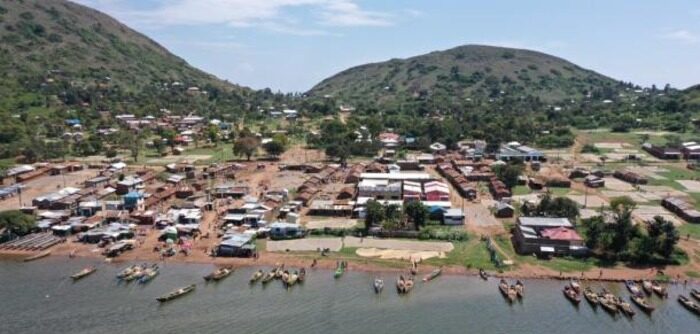
The organization pointed out that East Africa has a diverse terrain and climate, which, over the years, has made it more susceptible to weather- and climate-related impacts caused by natural hazards such as floods, droughts, landslides and other severe hydro-meteorological phenomena. Lake Victoria, Africa’s largest lake, heavily influences weather and climate conditions in East Africa, generating its own micro-climate as one of the most convectively active regions on earth. Countries in the Lake Victoria Basin (LVB) are often affected by severe thunderstorms, heavy rainfall, strong winds, high waves, lightning, hailstorms and waterspouts. The Lake, bordered by Kenya, Tanzania and Uganda, supports approximately 25% of its surrounding population, mainly fisherfolk.
Burundi and South Sudan, two countries not covered through the HIGHWAY project, will receive targeted support for institutional development through activities including the assessment of hydro-met monitoring networks, early warning infrastructure and institutional capacities, and the development of a roadmap for strengthening early warning systems and hydro-met services.
Mojwok Ogawi Modo, director general for meteorological services for South Sudan, stated, “In my capacity as Permanent Representative of South Sudan with WMO, I would like to express my deepest gratitude to CREWS for financing this development project. It provides a much-needed opportunity for the EAC to improve their capacities in climate change adaptation both as individual countries and as a region. The fact that the project is led by WMO and executed in partnership with The World Bank and UNDRR guarantees for the solid execution and sustainability of the project outcomes.”
Dr Agnes Kijazi, director of WMO Regional Office for Africa, said, “Africa continues to face grave challenges arising from a changing climate, and we know we must step up our collective efforts particularly in climate adaptation, disaster risk reduction and resilience building for sustainable development. Integrated and impact-based early warning systems are a critical part of the process and can provide individuals and communities as well as governments and decision makers with timely forecasts and warnings. This project therefore comes just at the right time, as it builds upon past and ongoing initiatives which have built the foundations for strengthening end-to-end EWS across the East Africa region.”
Gerard Howe, chair of the CREWS initiative and head of adaptation, nature and resilience at UK’s Foreign Commonwealth and Development Office (FCDO), added, “This is the first CREWS investment in a region where three countries, Tanzania, South Sudan and Rwanda have been identified by the Systematic Observations Financing Facility (SOFF) for financial support. It provides an opportunity to demonstrate the alignment and coherence between the respective financing mechanisms. In the countries benefiting from SOFF readiness and financial support for the maintenance of their observation infrastructure, CREWS funds will contribute to the improvement of weather forecasts and early warning service production and delivery, such as tools for the visualization of predictions and issuance of warnings. It is encouraging that Uganda, Burundi and South Sudan will receive such support.”