


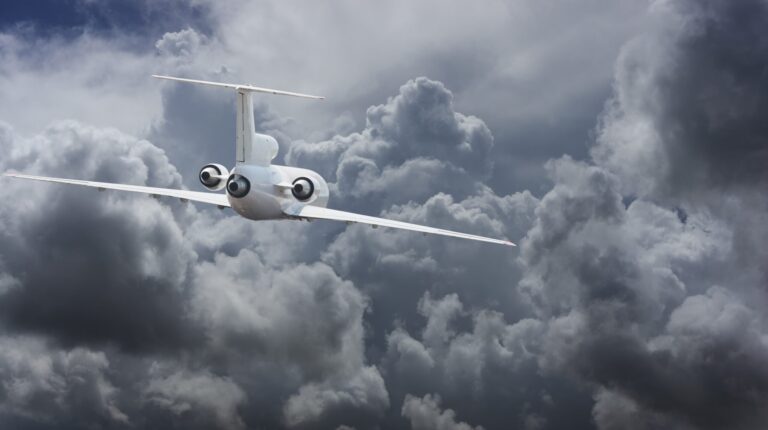
MIT researchers have unveiled a new lightning-prediction model that could help protect more unconventional aircraft designs – such as blended-wing bodies or truss-braced configurations – as aviation moves beyond traditional tube-and-wing designs.
According to MIT, more than 70 aircraft are struck by lightning each day, but the structure of today’s planes rarely sustain damage thanks to lightning protecting measures embedded in key zones throughout the aircraft. However, emerging aircraft designs present new aerodynamic and electrical behaviors, making existing lightning-zoning standards increasingly inadequate.
A team led by Carmen Guerra-Garcia, associate professor of aeronautics and astronautics (AeroAstro) at MIT, has developed a physics-based simulation tool that predicts how lightning attaches to and sweeps across a plane with any design. The tool generates a zoning map that highlights which regions of a plane require the highest levels of protection.
“People are starting to conceive aircraft that look very different from what we’re used to,” Guerra-Garcia said. “Physics-based methods are universal. They’re agnostic to the type of geometry or vehicle. This is the path forward to be able to do this lightning zoning and protect future aircraft.”
The research, published in IEEE Access, was conducted with MIT graduate student Nathanael Jenkins and Boeing engineers Louisa Michael and Benjamin Westin.
The model simulates airflow and electrical behavior across an aircraft’s surface to predict where lightning will likely attach and travel. The results are converted into probabilistic vulnerability maps aligned with the aviation industry’s existing zone classifications.
According to Jenkins, the method could dramatically improve the efficiency of lightning-protection systems. “Embedding copper mesh or foil throughout an aircraft is an added weight penalty,” he said. “And if we had the greatest level of protection for every part of the plane’s surface, the plane would weigh far too much. So zoning is about trying to optimize the weight of the system while also having it be as safe as possible.”
Guerra-Garcia’s group also plans to adapt the framework for other lightning-exposed technologies such as wind turbines, where strikes reportedly account for 60% of blade losses.
This research was funded, in part, by the Boeing Company.
In related news, Met Office makes “huge leap forward” in space weather monitoring