

Close Menu
Meteorological Technology International
  • News
    • A-E
      • Agriculture
      • Automated Weather Stations
      • Aviation
      • Climate Measurement
      • Data
      • Developing Countries
      • Digital Applications
      • Early Warning Systems
      • Extreme Weather
    • G-P
      • Hydrology
      • Lidar
      • Lightning Detection
      • New Appointments
      • Nowcasting
      • Numerical Weather Prediction
      • Polar Weather
    • R-S
      • Radar
      • Rainfall
      • Remote Sensing
      • Renewable Energy
      • Satellites
      • Solar
      • Space Weather
      • Supercomputers
    • T-Z
      • Training
      • Transport
      • Weather Instruments
      • Wind
      • World Meteorological Organization
      • Meteorological Technology World Expo
  • Features
  • Online Magazines
    • January 2026
    • April 2025
    • January 2025
    • September 2024
    • April 2024
    • Archive Issues
    • Subscribe Free!
  • Opinion
  • Videos
  • Supplier Spotlight
  • Expo
LinkedIn X (Twitter) Facebook
  • Sign-up for Free Weekly E-Newsletter
  • Meet the Editors
  • Contact Us
  • Media Pack
LinkedIn Facebook
Subscribe
Meteorological Technology International
  • News
      • Agriculture
      • Automated Weather Stations
      • Aviation
      • Climate Measurement
      • Data
      • Developing Countries
      • Digital Applications
      • Early Warning Systems
      • Extreme Weather
      • Hydrology
      • Lidar
      • Lightning Detection
      • New Appointments
      • Nowcasting
      • Numerical Weather Prediction
      • Polar Weather
      • Radar
      • Rainfall
      • Remote Sensing
      • Renewable Energy
      • Satellites
      • Solar
      • Space Weather
      • Supercomputers
      • Training
      • Transport
      • Weather Instruments
      • Wind
      • World Meteorological Organization
      • Meteorological Technology World Expo
  • Features
  • Online Magazines
    1. January 2026
    2. September 2025
    3. April 2025
    4. January 2025
    5. September 2024
    6. April 2024
    7. January 2024
    8. September 2023
    9. April 2023
    10. Archive Issues
    11. Subscribe Free!
    Featured
    November 27, 2025

    In this Issue – January 2026

    By Hazel KingNovember 27, 2025
    Recent

    In this Issue – January 2026

    November 27, 2025

    In this Issue – September 2025

    August 11, 2025

    In this Issue – April 2025

    April 15, 2025
  • Opinion
  • Videos
  • Supplier Spotlight
  • Expo
Facebook LinkedIn
Subscribe
Meteorological Technology International
Oceans

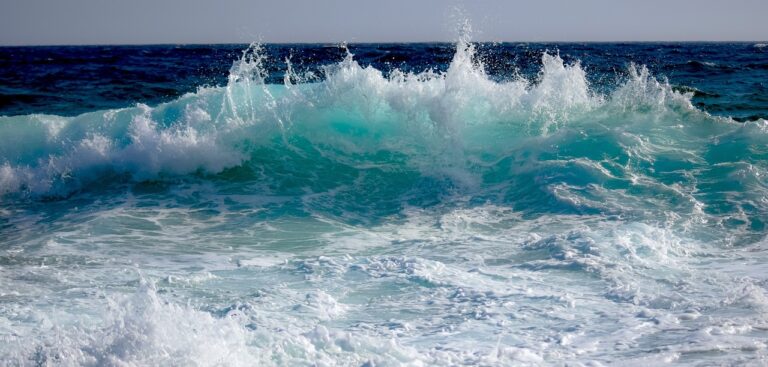
Climate change affecting California’s winter waves

William AtkinsonBy William AtkinsonAugust 2, 20232 Mins Read
Share LinkedIn Facebook Twitter Email
Credit: Pixabay
Share
LinkedIn Facebook Twitter Email

A study by University of California San Diego Scripps Institution of Oceanography researcher emeritus Peter Bromirski uses records dating back to 1931 to show that the average heights of winter waves along the California coast have increased along with climate change.

The study, published in the Journal of Geophysical Research – Oceans, achieved its extraordinarily long-time series by using seismic records to infer wave height, a method developed by Bromirski in 1999. The results join a growing body of research that suggests storm activity in the North Pacific Ocean has increased under climate change.

When waves reach shallow coastal waters, some of their energy is reflected back out to sea, according to Bromirski. When this wave energy collides with waves approaching the shoreline, their interaction creates downward pressure that is converted into seismic energy at the seafloor, which can be detected by seismographs. The strength of this seismic signal is directly related to wave height.

Bromirski developed this novel way to calculate wave heights because the buoys that directly measure wave heights along the California coast have only been collecting data since around 1980.

To work on the many decades of seismic records held at UC Berkeley, Bromirski needed to digitize the reams of analog seismograms spanning 1931 to 1992 so that he could analyze the data set as a whole. The process required the enthusiasm of multiple undergraduate students, a special flatbed scanner, and multiple years of intermittent effort to complete. Finally, with the digitized seismic data spanning 1931-2021 in hand, Bromirski was able to transform the data into wave heights and begin to look for patterns.

The analysis revealed that since 1970 California’s average winter wave height has increased by 13%, or about 0.3m, compared with 1931 to 1969. Between 1996 and 2016 there were also about twice as many storm events that produced waves greater than 4m along the California coast compared with 1949 to 1969.

The results echo an increase in wave height in the North Atlantic tied to global warming reported by a 2000 study.

Previous ArticleSri Lanka floods now easier to predict
Next Article MeteoSim to collaborate with Malawi Meteorological Services

Read Similar Stories

Climate Measurement

Windracers ULTRA drones to be deployed in Greenland on glacier surveying mission

March 12, 20263 Mins Read
Early Warning Systems

Water cycle instability drove global water-related disasters in 2025

January 20, 20263 Mins Read
Oceans

Oceans absorb record heat, driving extreme weather, according to international study led by Chinese Academy of Sciences

January 12, 20262 Mins Read
Latest News

Atmospheric G2 secures Japan weather forecasting license

April 21, 2026

China completes Antarctic meteorological research mission with Xuelong icebreaker

April 21, 2026

EWR Radar Systems wins US Air Force contract for portable Doppler radar support

April 20, 2026

Receive breaking stories and features in your inbox each week, for free


Enter your email address:


Supplier Spotlights
  • Synoptic Data PBC
Getting in Touch
  • Contact Us / Advertise
  • Meet the Editors
  • Media Pack
  • Free Weekly E-Newsletter
Our Social Channels
  • Facebook
  • LinkedIn
© 2026 UKi Media & Events a division of UKIP Media & Events Ltd
  • Cookie Policy
  • Privacy Policy
  • Terms and Conditions
  • Notice and Takedown Policy

Type above and press Enter to search. Press Esc to cancel.