


The European Space Agency (ESA) has reported that it has been closely monitoring a severe space weather event triggered by an intense X5.1-class solar flare observed on November 11, 2025. The flare, which peaked at 10:04 UTC, was followed less than an hour later by a coronal mass ejection (CME) traveling at an estimated 1,500km/s.
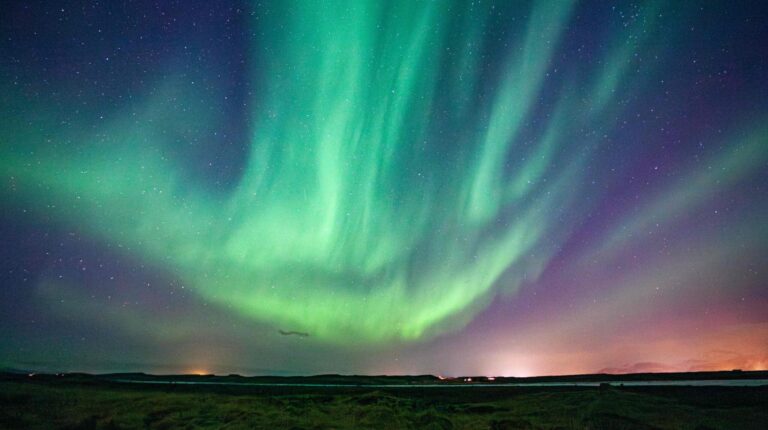
The CME reached Earth late at night on November 12, triggering a severe geomagnetic storm, but the ESA stressed that there was no direct biological risk to humans thanks to Earth’s magnetic field and atmosphere.
“The geomagnetic storm is estimated to continue at severe levels and may impact satellites, power grids and navigation systems,” said Juha-Pekka Luntama, head of ESA’s Space Weather Office on November 12. “We have observations of further CMEs erupting from the Sun, so severe space weather activity is foreseen to continue for the second half of this week.”
The British Geological Survey (BGS) upgraded its geomagnetic forecast to the highest intensity level, citing it as potentially the largest solar storm to affect the UK in over 20 years.
Earlier in the week, two strong X-type flares from the same solar active region (NOAA AR 14274) generated CMEs that already struck Earth, producing a G4-level geomagnetic storm. ESA’s Space Weather Office reported that the latest CME could merge with these earlier eruptions, potentially intensifying the storm.
The current solar activity is consistent with the approaching solar maximum, when such large flares and CMEs become more frequent. ESA’s network of space weather service centers continues to provide real-time data and alerts to spacecraft operators.
To improve forecasting accuracy, ESA is advancing several next-generation space weather missions, including Vigil, which will launch in 2031 to observe the Sun from Lagrange Point 5. It will detect potentially hazardous solar events before they come into view as seen from Earth, providing advance knowledge of their specificities and offering invaluable time to protect spacecraft and ground infrastructure.
In related news, Met Office launches space weather modeling suite for upper atmosphere forecasting